Building a Relationship with PTSD: Tips for Veterans and Survivors
A grounded, slow-paced guide for the 13 million Americans living with PTSD - and for the partners who love them. No fixing, no rushing, just the reframes, scripts, and platform habits that make dating feel survivable and, eventually, joyful.
By the InclusiveDating editorial team••9 min read
Quick Takeaways
Triggers are not rejection. A withdrawn moment is a symptom, not a verdict on the relationship.
Low-stim wins. Quiet daytime venues with predictable exits outperform loud restaurants every time.
Scripts protect both people. Pre-written sentences carry the conversation when the nervous system cannot.
Pause-and-resume matching on a trauma-informed platform lets you slow down without disappearing.
Triggers Are Not Personal Rejection: A Reframe
The single most damaging misread in PTSD dating is also the most common one: a partner pulls back during dinner, gets quiet in the car home, cancels the second date - and the person sitting across from them files it as "they're not into me." Almost always, that read is wrong. The nervous system has detected something - a smell, a noise, a half-remembered angle of light - and gone into protection mode. The withdrawal is about the threat the body just registered, not about the person at the table.
This reframe is the foundation of trauma-informed dating: assume protection, not rejection. It does not excuse harmful behaviour or remove accountability, but it changes the first question you ask from "what did I do wrong?" to "what just happened to your body, and how can we make the next moment safer?"
"When my partner goes quiet, I used to think he was leaving. Now I know he is just trying to come back into the room. There is a difference."
- A partner of a combat veteran, InclusiveDating community forum
For the person with PTSD, the reframe runs the other way. You are allowed to have a hard moment without it meaning the relationship is over, broken, or your fault. The hypervigilance is data, not a character flaw - and naming it out loud, even clumsily, almost always builds trust faster than disappearing.
The Scale of It
Hypervigilance in Early Dating: What Actually Helps
PTSD is more common than most people realise - and the early dating window is where its impact is sharpest. Knowing the numbers takes some of the shame out of the experience.
13M
Americans living with PTSD in any given year
U.S. Department of Veterans Affairs, 2025
~30%
of post-9/11 veterans report PTSD symptoms in their lifetime
National Center for PTSD, 2025
65%
of disabled adults report severe loneliness - higher for trauma survivors
CDC Disability & Health, 2025
Hypervigilance - the nervous system's tendency to scan for threat - does not switch off because the candle is lit and the wine is poured. In early dating, it shows up as exhaustion after a one-hour coffee, an inability to enjoy a moment you objectively wanted, or a delayed crash 24 hours later. The fix is not to push through. The fix is to design the environment so the body has fewer alarms to fire in the first place.
Date Design
Calm, Low-Stim Date Environments That Reduce Strain
The venue does about half the work. Pick the right environment and the conversation gets easier on its own.
🌿
Sensory-Light Venues
Quiet cafés in off-peak hours, botanical gardens, neighbourhood bookshops, art galleries on a weekday. Soft lighting, predictable acoustics, no surprise music spikes.
🏠
Familiar Settings
Returning to a venue you already know removes a layer of novelty stress. The body has already mapped the exits, the bathrooms, and the noise floor - that bandwidth is freed up for the actual person.
☀️
Daytime Options
Morning coffee, afternoon walks, lunch in a park. Daylight is regulating for most trauma survivors, and a clear end time reduces the open-ended dread that evening dates can produce.
🚶
Side-by-Side, Not Face-to-Face
Walks, museums, driving ranges - anything where eye contact is optional and shoulders are turned the same direction. Talking gets easier when the nervous system is not also performing.
🪟
A Clear Exit Plan
Both people knowing the date is "an hour, then we see" beats an open-ended evening. A built-in exit removes the panic of having to invent one.
🔕
No-Surprise Activities
Skip loud bars, fireworks, escape rooms, immersive theatre, and anything with sudden noises. Surprises are entertaining for some brains and destabilising for a trauma-affected one.
Communication Scripts for Boundaries and Triggers
When the nervous system is dysregulated, language disappears first. Pre-writing sentences - literally saving them in your notes app - means you do not have to compose under fire. Here are four that the InclusiveDating community uses most often.
Context: Disclosing PTSD on a first or second date.
"Heads-up before we meet - I'm a veteran with PTSD. Crowds and loud places are a lot for me, so I gravitate toward quieter spots. It does not mean I'm bored or losing interest, just my system asking for less noise. Happy to answer anything."
Context: Mid-date, when you notice yourself starting to dissociate.
"I'm getting a little overwhelmed - can we step outside for two minutes? Nothing you did. My body just needs to reset."
Context: The next day, after a hard moment you did not name in real time.
"Last night I went quiet near the end. It was not about you - something in the environment caught me. I had a lovely time and would like to see you again, just somewhere quieter."
Context: Setting a boundary about a topic that is currently too raw.
"I'm not ready to talk about deployment stories yet, and maybe not for a while. I'm happy to share other things - that one is just on its own timeline."
Notice what these scripts have in common: they name the body, not the person; they take responsibility without apologising for existing; and they leave the door open. That is the whole skill.
Pause-and-Resume Matching: A PTSD-Friendly Feature
One of the most damaging dynamics on mainstream apps is the implicit penalty for slowing down. Stop swiping for two weeks and the algorithm quietly buries your profile; stop replying for three days and your match has usually moved on. For someone navigating a PTSD flare, this is the worst possible incentive structure - it pushes you to keep performing on the days your nervous system can least afford it.
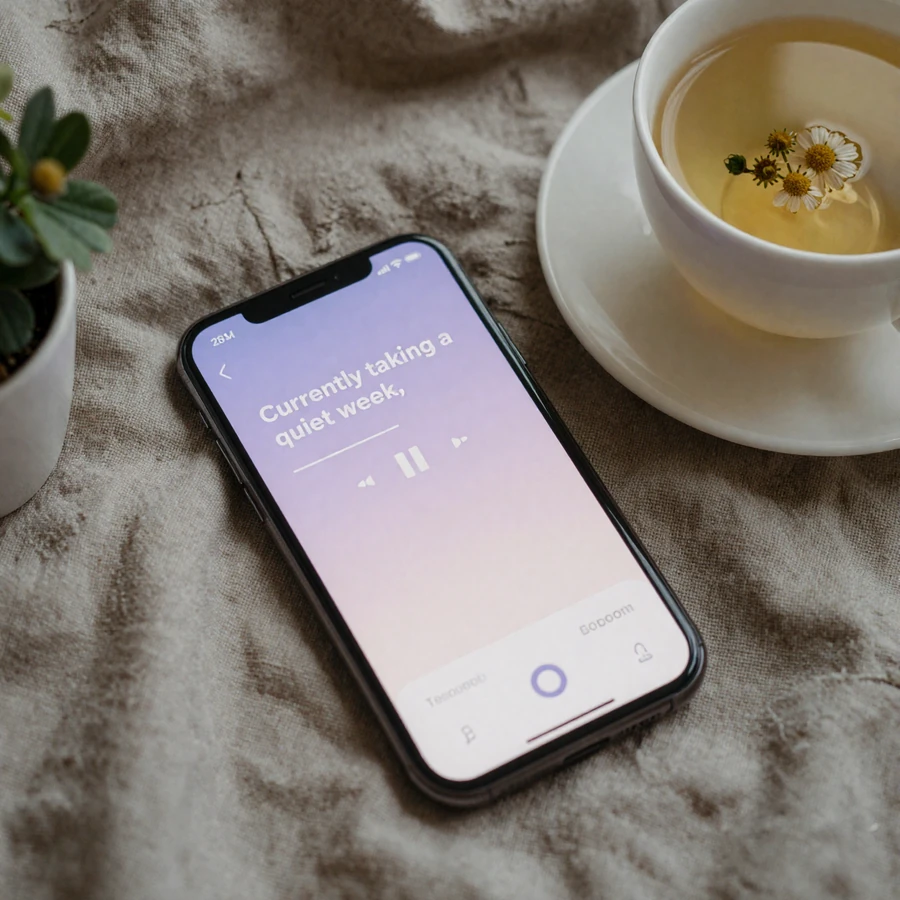
Trauma-informed platforms handle this differently. InclusiveDating's pause-and-resume function freezes your active matches without dropping you in search rankings. Conversations are held; people you are talking to see a gentle "currently taking a quiet week" badge instead of being ghosted. When you come back, nothing has been deleted and you have not lost ground.
Pair that with opt-in pace controls - slower default reply windows, no read receipts, no "active 3m ago" stamps - and the platform stops being another source of pressure.
For Partners: How to Support Without Fixing
If you are dating someone with PTSD, the most useful thing you can do is also the hardest: resist the urge to solve. The trauma already happened; you cannot reverse-engineer it out of them. What you can do is build the kind of relational steadiness that lets the nervous system slowly recalibrate around safety. Here is the short list:
Believe the symptom, not the story you tell yourself about it. When they go quiet, the explanation is the symptom - not a hidden message.
Ask, do not assume, what helps in a hard moment. Some people need touch, some need three feet of space, some need a glass of water and silence. The wrong guess feels worse than asking.
Hold predictability as a love language. Showing up on time, texting when you said you would, naming plan changes early - these are not boring, they are regulating.
Build your own support system. A partner who has nowhere else to put their stress eventually puts it on the trauma survivor. Therapy for you, friends for you, a life for you.
Learn the basic vocabulary. Hyperarousal, dissociation, emotional numbing, trigger - knowing what these mean keeps you from misreading them. The National Center for PTSD has a free family-and-friends guide.
Do not turn the relationship into a recovery project. They are a person, not a case. Watch movies. Cook badly. Argue about small things. The ordinariness is the medicine.
Veteran Success Story
Finding Calm Together
“
I was sure post-deployment I'd be alone for good. I'd ghosted two people on Tinder mid-date because a motorcycle backfired. On InclusiveDating I marked myself as a veteran with PTSD up front, used the pause feature during a rough month in February, and Naomi was still there when I came back. We have rules now - daytime dates for the first two months, no fireworks weekend, scripts saved in my notes for the days my mouth stops working. Two years in. I never thought 'two years in' was a phrase I'd get to say.
Frequently Asked
Dating with PTSD: FAQs
Can someone with PTSD have a healthy relationship?
Yes. People with PTSD form and sustain healthy long-term relationships every day, including marriages spanning decades. The diagnosis is not the predictor of relationship quality - the predictor is whether both partners treat triggers as nervous-system events rather than rejection, communicate about pace and environment, and have access to trauma-informed support such as individual therapy, couples counselling, or peer community. Research consistently shows that steady, low-conflict relationships improve PTSD outcomes, and PTSD-informed relationships report satisfaction levels comparable to the general population.
How do I tell a date I have PTSD?
Disclose in a low-pressure, factual sentence before or early in the meeting - for example: "Heads-up, I have PTSD, so I prefer quieter places and may need a short break if a venue gets loud. It does not mean I am losing interest." This pre-frames any withdrawal as a symptom rather than rejection and gives your date useful information without turning the date into a trauma briefing. You do not owe anyone your trauma history, only the practical adjustments that affect the date itself.
What date ideas work best for trauma survivors?
The best PTSD dates are low-stimulation, daytime, and have a clear end time. Strong options include quiet cafés in off-peak hours, botanical gardens, art galleries on weekdays, neighbourhood walks, bookshops, lunch in a park, or any side-by-side activity that makes eye contact optional. Avoid loud bars, fireworks events, immersive theatre, escape rooms, crowded restaurants, and any venue with unpredictable noise. Returning to a familiar location is almost always less taxing than a brand-new one.
How is dating with PTSD different for veterans?
Veterans dating with PTSD often carry additional layers: service-connected trauma, transitions out of structured military environments, and a culture where disclosing mental health symptoms can feel professionally risky. Veteran-friendly dating platforms and disability-inclusive sites like InclusiveDating address this with private disclosure controls, veteran-aware moderation, and community spaces where service-related context is understood without explanation. The dating fundamentals are the same, but the relief of not having to translate basic terms - VA, OEF/OIF, MST - is significant.
Should I use a trauma-informed dating site instead of mainstream apps?
For most PTSD users, yes. Mainstream swipe apps reward speed, punish slow replies, and offer no pause mechanism - all of which work directly against a trauma-affected nervous system. A trauma-informed platform like InclusiveDating offers pause-and-resume matching, opt-in pace controls, no read receipts, mental health resource links, and a community of users and moderators who treat PTSD as ordinary rather than alarming. You can absolutely meet partners on mainstream apps, but the friction is consistently higher and the misunderstandings more frequent.
Keep Reading
Continue Your Reading
♥ Category
PTSD Dating Site
The full category page: 13 million Americans with PTSD, veteran-aware features, pause-and-resume matching, and a calm low-stim community designed for trauma survivors.
Recognising devotees, photo verification, romance scam red flags, Share My Trip, and the safety habits every trauma survivor should bring to first meetings.