
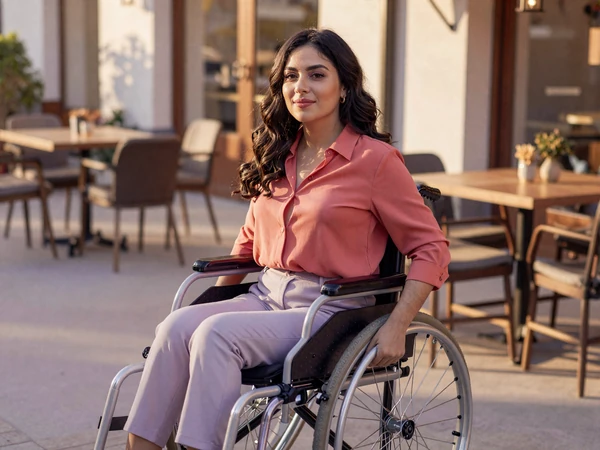
Wheelchair Dating Site
Mobility-aid photo guidance, accessibility filters, and venue-planning tools for paraplegic, quadriplegic, and ambulatory wheelchair daters.
Explore wheelchair datingA practical, ableism-free guide to building a profile that filters for chemistry, sets your access needs in plain language, and helps you stop dreading the "by the way…" moment. Written for adults dating with a disability in 2026.
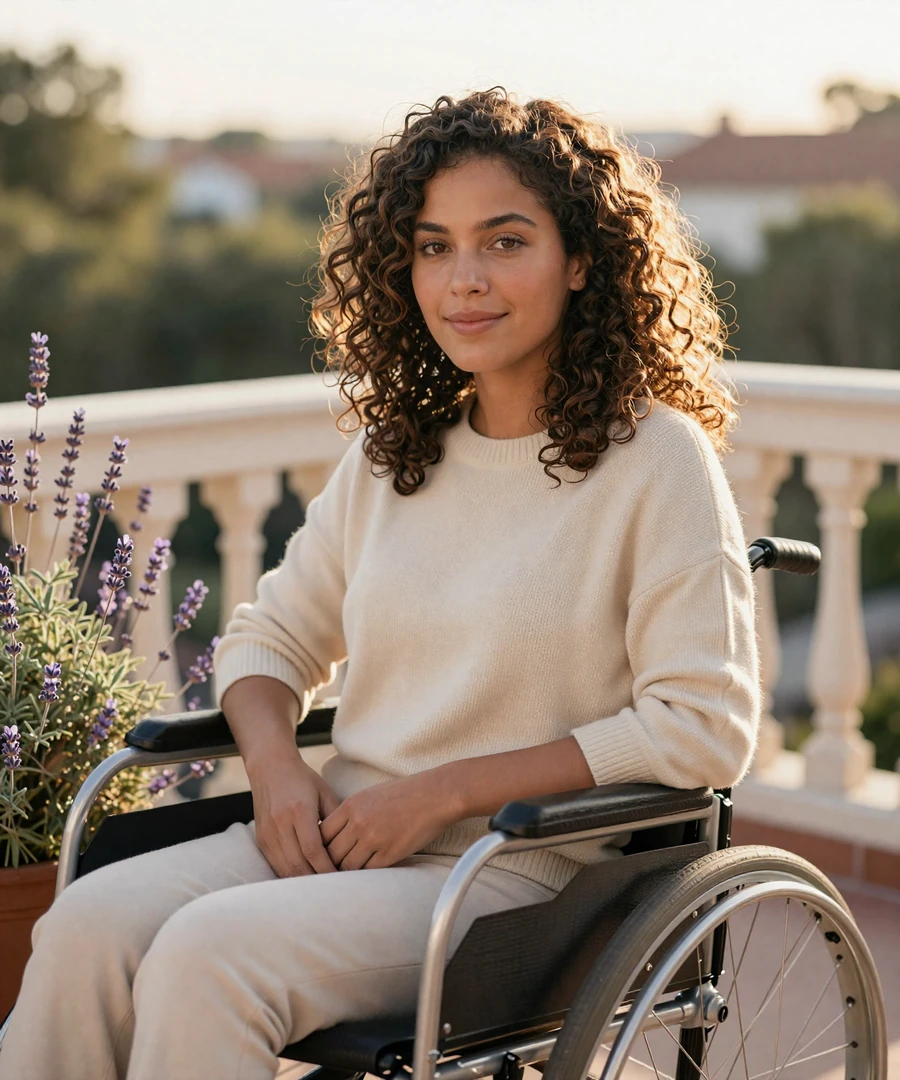
A good dating profile is a snapshot of who you are when life is going well, not a medical chart. Research from the disability dating community is clear: 78% of people with disabilities say worry about partner judgment has hurt their romantic life, and 80% have postponed relationships because intimacy felt hard to discuss. The fix is not to hide - it is to reorder.
Open with the texture of your real life. The podcasts you re-listen to on bad-pain days. The chess opening you actually play. The fact that your dog has more LinkedIn endorsements than you do. Three to five concrete details outperform a hundred generic adjectives like "fun" and "easygoing" - both for AI matching algorithms and for the human reading at 11 p.m. on the couch.
Aim for roughly 70% personality, hobbies, and what you are looking for, and 30% practical context - including disability disclosure if you choose to include it. That ratio reads as confident, not as a disclaimer.
If you are dating on InclusiveDating specifically, you have one structural advantage worth using: the optional Disability Deets field. It lives next to your bio rather than inside it, which means your personality stays the headline and your access needs stay searchable. Members on dedicated platforms like ours, Dateability, and Special Bridge consistently report less disclosure anxiety than those on mainstream apps - because the community baseline already assumes disability is part of life, not a plot twist.
There is no single right time. Pick the option that matches your energy, your platform, and the kind of partner you are looking to attract.
Best for: low stress, fast filtering, and dedicated disability dating apps. People who message you have already opted in - no rejection-after-reveal, no wasted weeks. Wheelchair users in particular report higher match quality when the chair is visible on photo one.
Best for: mainstream apps and invisible disabilities (bipolar, epilepsy, autism, chronic illness). It gives your personality room to land first, then introduces context once there is real curiosity. Keep it casual, not a confession.
Best for: when access is the next logical conversation. Planning a first date is the perfect doorway - "I use a wheelchair, so a step-free spot would be ideal - what about that cafe on Pearl?" Honest, useful, never apologetic.
Below are nine plug-and-play lines pulled from real profiles that worked. Steal a phrase, swap the specifics for yours, and you have a draft.
"Wheelchair user who loves live music, terrible karaoke, and any taco within a 10-mile radius. Looking for someone who plans dates by accessibility and menu."
"Below-knee amputee, runner before and after. My prosthetic has more selfies than I do. Ask me about it whenever - I'd rather questions than awkward staring."
"Autistic, happiest with direct communication. If you mean it, say it. If you don't, that's information too. I'll meet you exactly where you are."
"ADHD brain, hyperfocus on board games and bread baking. I will text back fast, then disappear for two days, then send you a 600-word voice note. Bring snacks."
"I live with a chronic illness, which means I plan dates with spoon-budgeting in mind. I love a slow Sunday more than a packed Saturday - if that sounds like a feature, swipe right."
"Bipolar II, well-managed, four years stable. I'm not looking for a rescuer - I'm looking for someone whose calm I can match."
If you prefer to disclose after a few messages, this universal script - adapted from the Amputee Coalition's guidance - works for almost any condition:
"Before we plan anything, there's something easy to mention: I have [condition], which mostly means [one practical detail]. Happy to answer anything - but I'd love to hear what you thought of [that thing they said earlier]." - Universal disclosure script, adapted from the Amputee Coalition
Photos do more heavy lifting than text. They also do something words cannot: they screen out people who would otherwise unmatch the moment they learn. That is a feature, not a flaw.
Before you publish anything, write down five qualities you actually bring to a relationship, the kind of connection you want (friendship-first, serious, low-pressure, community), and your personal limits across communication, access, emotion, and pace. Your profile gets sharper when you stop writing around what you cannot do and start writing toward what you want.
Some lines feel honest in your head and read as red flags on a screen. Here is the short list of phrases that consistently underperform:
| Avoid writing | Try instead |
|---|---|
| "Despite my disability, I'm still fun." | "I host the best low-key game nights in my zip code." |
| "I suffer from epilepsy." | "I live with epilepsy. Calm Sundays are my love language." |
| "Looking for someone who can handle me." | "Looking for a partner who values direct communication." |
| "No fetishists." (as the entire bio) | Use the platform's anti-devotee filters; let your bio be about you. |
| "Wheelchair-bound." | "Wheelchair user" - the chair is freedom, not a binding. |
| A list of every diagnosis and medication. | One practical line: "Chronic illness, flexible plans appreciated." |
Two words to retire entirely on any disabled dating site: "midget" (always offensive - use "little person" or "LP") and "handicapped" (use "disabled" or the specific term). For a deeper dive into respectful language, our safety tips guide covers community-specific terminology in full.
Mobility-aid photo guidance, accessibility filters, and venue-planning tools for paraplegic, quadriplegic, and ambulatory wheelchair daters.
Explore wheelchair dating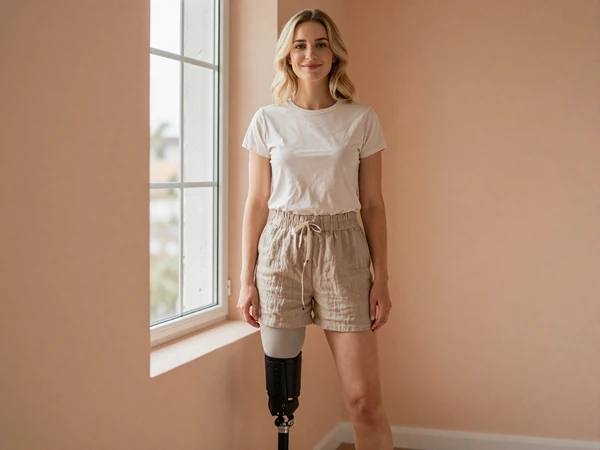
The three bio styles - humorous, casual, and deep-connection - plus the universal disclosure script written for amputees and limb-difference singles.
Explore amputee dating
Identity-first profile prompts, friendship-first toggle, and low-sensory UI for autistic adults who are done masking on swipe apps.
Explore autism datingThere are three approaches that consistently work: disclose in the profile itself (fastest filter, lowest emotional cost), disclose after a few messages (lets personality land first), or disclose in a practical moment such as planning a first date (most natural, never defensive). On a dedicated disability dating app like InclusiveDating, the in-profile option is the most popular because the community already starts from a place of understanding.
Mentioning your disability in your bio is optional but often helpful. It filters out people who would unmatch later anyway and signals confidence to people who are genuinely open. Aim for one short, practical sentence rather than a paragraph - your personality should still be the headline, not your diagnosis.
Wheelchair users report the best match quality when the chair is clearly visible in the first or second photo. Include one activity shot, one clear face photo in natural light, and one social photo with friends or a pet. Avoid cropping yourself out of your chair - it almost always leads to mid-conversation rejection later.
For invisible disabilities such as bipolar disorder, epilepsy, autism, ADHD, or chronic illness, one practical line in your bio works well: "Live with [condition], flexible plans appreciated" or "Neurodivergent, happiest with direct communication." Many members on InclusiveDating prefer disclosing through the dedicated Disability Deets section, which keeps the bio personality-first.
Avoid "wheelchair-bound" (use "wheelchair user"), "suffers from" (use "lives with"), "midget" (always offensive - use "little person" or "LP"), and "handicapped" (use "disabled" or the specific condition). Also retire framing phrases like "despite my disability" - they suggest your life requires a caveat. It does not.
No. Disability is private medical information, and you control the timing. Disclosing after a few messages or at the moment of first-date planning is widely considered honest and respectful - provided you do not actively conceal accessibility-relevant facts that would change the other person's informed choice (such as planning a long hike when you use a mobility aid).