Moves Too Fast
Declarations of love within days, talk of marriage in week one, pet names before you have exchanged ten messages. Real intimacy takes time - manufactured intimacy does not.
Dating with a disability should feel exciting - not exhausting. This guide walks you through the seven safety habits that protect you on any disability dating app: spotting devotees, verifying profiles, planning a calm first meeting, recognizing romance scams, and using accessibility-aware tools to stay in control of your privacy.
Last updated May 13, 2026 · 7-minute read
Dating apps were never designed with disabled users in mind, and the safety gap shows up in the data. Understanding the numbers helps you set expectations - and recognize why a specialized, moderated environment changes the outcome.
A devotee is someone whose primary romantic interest is the disability itself, not the person behind it. Devoteeism - also called attraction to disability - sexualizes mobility aids, prosthetics, scars, or specific diagnoses, and it is one of the most common safety concerns disabled singles raise on every platform. Learning to spot it early saves emotional energy and protects your boundaries.
What does this mean in practice? Trust the discomfort. If a conversation feels less like flirting and more like an interview about your body, it is. Hit block, hit report, and move on. On InclusiveDating, our moderators are trained in disability culture and review every devotee report personally - a single confirmed violation triggers a permanent ban.
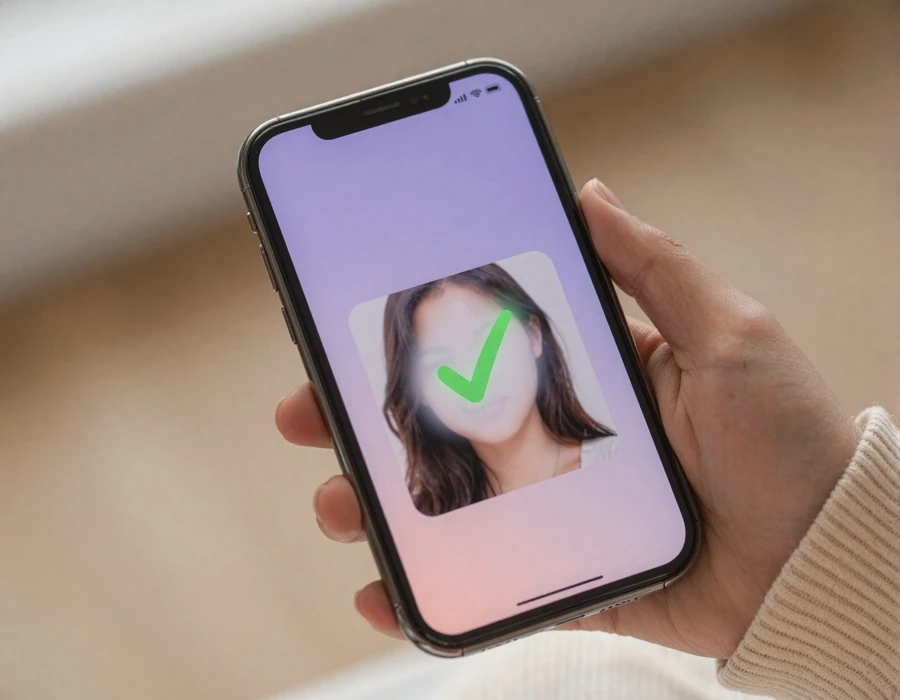
Selfie-video verification - pioneered by platforms like AbiliMatch and now standard on InclusiveDating - is the single strongest defense against catfish accounts, romance scams, and stolen-photo devotee profiles.
You record a short live video on signup. The video never appears on your profile - it is used only to confirm the photos you upload show the same person.
A trained moderator compares your selfie video to your profile photos. AI alone is not used because facial recognition fails more often on disabled and BIPOC faces.
Verified members display a small lavender heart-lock chip on every profile, so other singles can filter to verified-only matches with one tap.
Every conversation on a trustworthy disability dating app should live inside the platform until you decide otherwise - not on your phone, not on Telegram, not on WhatsApp. Private text, voice notes, and video calls run through encrypted in-app channels so your real phone number, email, and home location stay hidden until you choose to share them.
Voice and video options also make casual hangouts feel natural without the pressure of meeting in person too soon. You stay in full control of when - and whether - to share personal contact details. If anyone asks you to "move to WhatsApp" within the first few messages, treat it as a yellow flag and slow the conversation down.
Want a deeper walkthrough? Our blog guide on online safety tips for disabled singles covers screenshot etiquette, voice-note privacy, and how to gracefully exit a conversation that turns invasive.
Excited and nervous before a first date is normal. Here is the seven-item checklist disability-dating veterans use to keep that excitement from turning into worry. Treat it as a floor, not a ceiling - and adapt for your specific access needs.
A cafe with a step-free entrance, an ADA-compliant restaurant, an accessible park, or a museum lobby. Confirm bathrooms and parking in advance.
Use iPhone Find My, Google Maps location share, or Life360 to broadcast your live location to a friend or family member for the full duration of the date.
Send the venue address, your match's profile screenshot, and the exact time you will text "I'm safe." Agree on what they should do if that text never arrives.
Drive yourself, book accessible Uber WAV, paratransit, or arrange a ride home with a friend. Never let a first date pick you up from home.
Power chair to 100%, hearing aid batteries fresh, phone fully charged, and a portable battery in your bag. Communication tools are safety tools.
"I have a thing at 4 p.m." gives you a graceful exit if the energy is off - and a natural pivot to a second date if it goes well.
Rehearse a clean line: "I need to head out - thanks for meeting." You owe no one an explanation. Comfort matters more than politeness.

Block and report should be a two-tap action on any disability dating app - and on InclusiveDating, they are. Tap the three-dot menu on any profile or message thread, choose the reason (harassment, devoteeism, scam, impersonation, ableist language, or other), and the account is hidden from you immediately.
Here is where it gets different from mainstream apps: every report routes to a trained human moderator inside 24 hours - not a copy-paste bot. We confirm what action was taken, and serious violations like fetishization or threats receive a permanent ban without appeal. Your report history stays private even from the reported account.
If you experience harm that goes beyond platform tools, contact RAINN's National Sexual Assault Hotline at 1-800-656-HOPE or the Disability Abuse Hotline. Review our community standards for the full list of behaviors that trigger removal.
Romance scammers specifically target disabled and chronically ill singles because they assume isolation and longing make people easier to manipulate. The pattern is consistent - and once you know it, it is easy to spot.
Declarations of love within days, talk of marriage in week one, pet names before you have exchanged ten messages. Real intimacy takes time - manufactured intimacy does not.
Camera "broken," travel "off-grid," military deployment, oil rig assignment, surgery just before every scheduled call. If they cannot or will not video chat after two weeks, they likely are not who their photos claim.
Medical emergency, customs fee, plane ticket to finally meet, crypto investment opportunity. Anyone asking for money - in any form - before you have met in person is a scam. Block immediately.
Generic safety advice often skips the lived realities of disabled daters. Here are three safety considerations that specifically affect screen reader users, deaf and hard-of-hearing daters, and singles with limited mobility.
Looking for category-specific safety guidance? Visit our PTSD dating, autism dating, or wheelchair dating communities for safety advice tailored to each experience.
On InclusiveDating, tap the three-dot menu on any profile or message thread and choose Report. Select a reason - harassment, devoteeism, romance scam, impersonation, ableist language, or other - and add details. The reported account is immediately hidden from you, and a trained human moderator reviews the report within 24 hours. You receive confirmation of the outcome, and your identity stays private from the reported account.
Three patterns appear in nearly every romance scam: the conversation escalates to declarations of love within days, the person is never available for video calls and offers escalating excuses, and they eventually ask for money, gift cards, or crypto for a medical emergency, plane ticket, or investment. If any of these appear, block immediately and report. Scammers specifically target disabled and isolated singles, so the patterns are well documented.
Photo verification is a two-step human-reviewed process. You record a short selfie video that never appears publicly, and a trained moderator compares it against the photos you uploaded to your profile. AI alone is not used because facial recognition fails more often on disabled and BIPOC faces. Verified members wear a small lavender heart-lock badge that other singles can filter for.
Block and report. Use the in-app Report button and select Devoteeism or Fetishization as the reason. On InclusiveDating, a single confirmed devotee violation triggers a permanent ban - there is no warning system because the harm is too high. You do not owe the sender a polite reply or an explanation. Your discomfort is the entire signal you need.
For most disabled singles, yes - when the platform combines human moderation, selfie-video verification, and active anti-devotee policy. Mainstream apps document a 70% rejection rate after disability disclosure and an 88% rate of app-facilitated harassment for disabled users. Specialized platforms like InclusiveDating remove those harms at the design level, not at the user level.