
On other apps I had to ask a sighted friend to swipe for me. It felt like dating with a chaperone. On InclusiveDating I made an audio bio on the first day, and that night I received voice notes I could actually hear, not photos I couldn't see. Marcus's bio made me laugh out loud - that was the first time a dating app had ever made me laugh, full stop. We did three audio-only calls before meeting at a quiet café near my apartment. He arrived with the menu already memorised and asked what I'd like instead of describing it at me. We've been together nine months. I haven't opened a sighted-only app since.
Blind People Dating Category
Blind People Dating Site with Full Accessibility
InclusiveDating is a blind people dating site built around how you actually use the web - screen readers, refreshable braille, voice control, magnification, or your own listening rhythm. Visually impaired singles deserve more than a swipe pile they can't see. Here, audio bios speak first, every image carries a real description, and every button has a label your screen reader can read out loud.
Free forever · WCAG 2.2 design · Verified profiles · Audio-first messaging
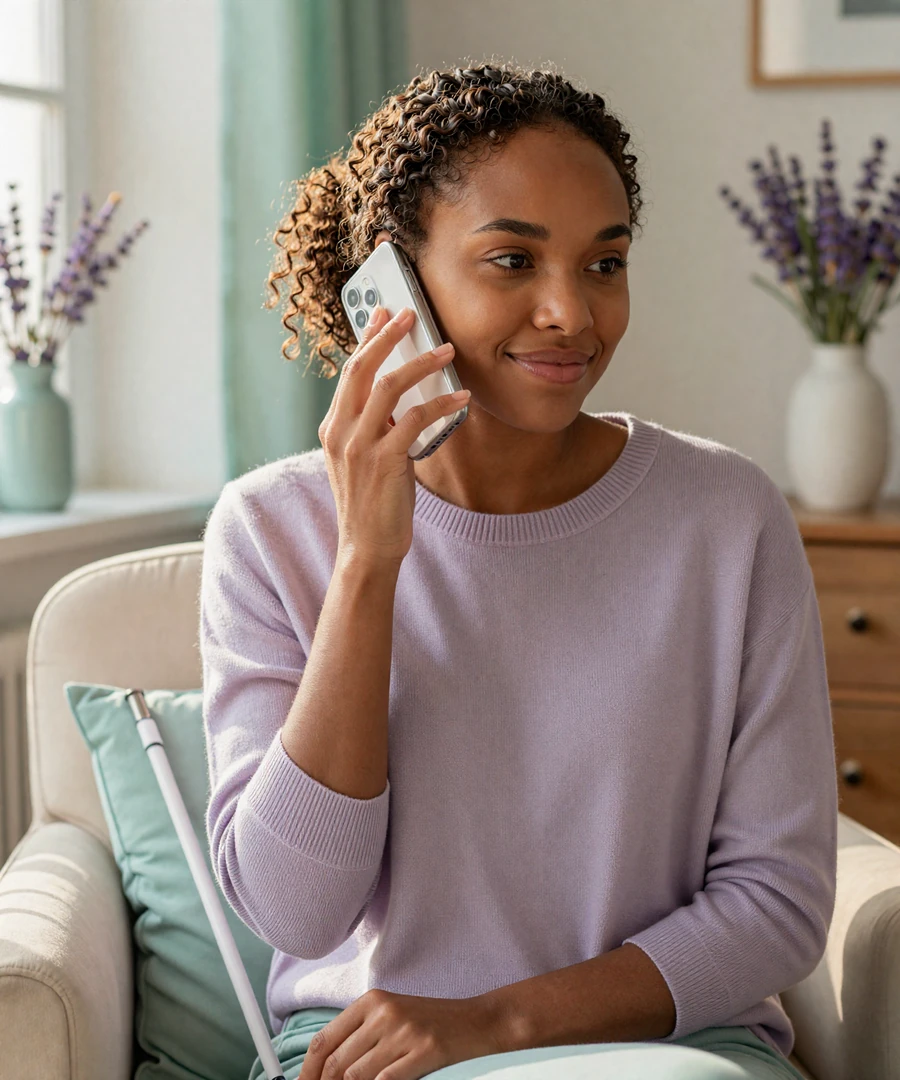
Visually Impaired Singles in 2026
Blind Daters Are Underserved by the Apps Sighted Daters Take for Granted
Roughly 1 in 30 Americans lives with significant vision loss, and the mainstream dating ecosystem still treats visual swipe-stacks as the universal interface. Numbers tell the story of why a dedicated blind people dating site matters in 2026.
7.6M
US adults live with significant vision loss, including 1.1M who are legally blind
American Foundation for the Blind, 2024
320
Monthly US searches for "blind dating app" - a niche still mostly ignored by Bumble, Hinge and Tinder
Google Keyword Planner, 2025
70%
Of disabled online daters report being ghosted after disclosing - a higher rate for visible aids like white canes
Disability Dating Survey, AbleSingles 2024
Why Mainstream Apps Fail
Why Visual-Only Swipe Apps Exclude Blind Singles
Mainstream dating apps were designed as a slot-machine of photographs. The product loop is: see a face, swipe a direction, repeat. That loop assumes a user with full sight, a steady hand, and a touchscreen that responds to gesture rather than to assistive technology. For blind and visually impaired singles, the loop breaks at every step. Profile photos with no alt text are silence to a screen reader. Swipe gestures conflict with VoiceOver and TalkBack. CAPTCHAs gate the front door. Map-based "near me" features assume a user who drives. The product is not unfriendly to blind daters - it was simply never built for them.
Audits of the four largest dating platforms repeatedly find the same accessibility failures: unlabeled buttons, low colour contrast, image-only conversations, and gesture-only navigation that screen readers cannot announce. The frustration is not a small ergonomic complaint - it is a complete inability to know who you matched with, who messaged you, or what they look like. Online safety compounds the issue, because a dater who cannot independently verify a profile is more exposed to romance scams.
The shorter version: mainstream apps are not "almost accessible." They fail on five categories at once - screen readers, contrast, alt text, keyboard navigation, and CAPTCHAs - and each failure compounds the next. Visually impaired singles are not a small accessibility tweak away from inclusion; they need a dating platform built for them from the first wireframe.
InclusiveDating took the opposite approach. The platform was designed against WCAG 2.2 guidelines and tested with blind and low-vision users from day one, the same model AbleSingles popularised in the disability dating market. The result is not a "compatible" experience - it is a primary one. Every feature on the site exists in an audio-first version, and every visual element is labelled, described, and reachable by keyboard or voice command.
Accessibility, Done Properly
Accessibility Features Built for Blind and Low-Vision Users
Every feature below was tested with blind and low-vision members before launch. Nothing here is a 'plugin' bolted on - these are core product decisions that shape how the platform behaves end to end.
Screen Reader Optimised
Semantic HTML, ARIA live regions and labelled controls so VoiceOver, JAWS, NVDA and TalkBack read every match, message and menu in a sensible order - no orphaned buttons, no decoded icons.
Voice Messages by Default
Send and receive 60-second voice notes from the first message. Tone, laughter and listening style carry the personality that walls of text often flatten - especially for low-vision typists.
Audio Profile Bios
Every profile can include a 30 to 90-second spoken bio. Sighted-only photos become optional context; your voice becomes the primary impression.
Real Image Descriptions
Members are prompted to write meaningful alt text for each photo - and a moderation pass rewrites anything that says "image" or "photo." Dateability popularised this; we made it mandatory.
Full Keyboard Navigation
Every action - like, message, block, verify, edit profile - works with Tab, Arrow keys, Enter and Escape. No gesture is ever the only way to do something.
High-Contrast & Large Text
A WCAG 2.2 AA contrast ratio everywhere, an optional AAA mode, and a large-text toggle that scales the whole interface for low-vision daters without breaking the layout.
Logical Reading Order
Profiles read top to bottom in the order a screen reader expects: name, pronouns, audio bio, written bio, disability context, photos with descriptions, prompts. No surprise jumps.
Accessible Verification
Photo verification has an audio-described alternative: a short voice-prompt check completed in-app, so verified-only filters do not lock blind members out.
How Connections Actually Form
Voice-First Connection: Audio Bios and Voice Notes
Sighted dating culture trains people to fall in love with a photograph and then audit the person afterwards. Blind dating works in the opposite direction - voice first, person first, photograph (if at all) last. The platform is engineered to support that order.
Audio reveals a remarkable amount of compatibility data in a very short window. A 45-second voice bio carries accent, pace, humour, breath, hesitation, warmth and listening cadence - signals that take three written exchanges to surface and ten to confirm. For a blind dater, that information is not a "nice extra"; it is the primary channel. For a sighted partner of a blind dater, it is often the first time they have ever judged a match on character rather than on filtered photography.
"The first time I heard his voice bio I knew more about him than I had ever learned from six weeks of texting on Hinge."
- Lena, InclusiveDating member, blind since age 14
How members use audio in practice
- Spoken bio (30-90 seconds). Introduce yourself, name two interests, name one boundary, end with a question for the listener.
- Voice notes in chat. Faster than typing, far more expressive, and accessible to braille-display users who prefer not to compose long messages mid-conversation.
- Audio-only first dates. Schedule a 20-minute in-app voice call before agreeing to meet in person. Most members tell us this single habit replaces three or four awkward face-to-face attempts.
- Read-aloud descriptions of photos. When you do post a photo, your screen-reader-friendly description becomes the actual content; the image is just the visual companion to it.
For couples where one partner is blind and the other is sighted, audio also resets the conversation about photography. The sighted partner no longer treats photos as the main artefact, and the blind partner no longer feels excluded from the start of the courtship. The relationship begins on a channel both partners share fully.
Stay Safe
Safety Tips for Blind and Visually Impaired Daters
Disabled daters face higher rates of harassment, fetishisation and romance scams than the general dating population, and visually impaired members face a specific layer on top: it is harder to independently verify whether a profile is who it says it is. The good news is that a few habits close that gap almost completely.
-
1
Match only with verified profiles at first.
Use the verified-only filter for your first 90 days. InclusiveDating verifies through a voice-prompt check with an audio-described alternative, so the badge is meaningful and accessible.
-
2
Listen for inconsistencies in voice notes.
Romance scammers often script written messages but stumble on improvised audio. A 30-second voice note in response to a specific question is one of the best low-effort scam filters available to blind daters.
-
3
Never move off-platform in the first two weeks.
WhatsApp, Telegram and email are where romance scams escalate. In-app messaging keeps moderation, blocking and reporting one tap away.
-
4
Decide what your guide dog or cane reveals - and when.
Mentioning a mobility aid in your audio bio filters out incompatible matches before you invest emotional energy. You can also keep aid photos for chat-stage rather than your main grid.
-
5
Tell a trusted person about every first meeting.
Share the venue, time, your match's first name and the platform username with a friend or family member. Use Apple Share My Location or Google Trusted Contacts.
-
6
Recognise the fetishiser script.
Excessive curiosity about your blindness in the first messages, requests to describe your daily routine in unusual detail, or "I have a thing for blind women" comments are not flattery. Block, report, move on.
Deeper coverage of these patterns lives on our safety tips page and in the full online safety guide for disabled singles.
First Dates
Planning Accessible First Dates
Most first-date advice on the wider internet was written by sighted daters for sighted daters. Below is a quick comparison of common date types through the lens of a blind or low-vision visitor, plus venue features that consistently make in-person meetings calmer.
| Date type | Common pitfall | What works for blind & low-vision daters |
|---|---|---|
| Audio-only video call | Sighted partner expects camera on by default | Audio-only by mutual agreement - 20 to 30 minutes, no visual pressure either side |
| Quiet daytime café | Crowded coffee shops drown out conversation and disorient navigation | Off-peak slot (10-11 a.m. or 2-3 p.m.), single entrance, table reserved near a quiet wall |
| Loud bar at night | High noise, low contrast, unpredictable layout | Avoid for first meetings; better as third or fourth date once trust is built |
| Museum or gallery | Visual-only experience excludes the blind partner | Choose museums with audio-described tours or tactile exhibits (most major US museums now offer both) |
| Outdoor walk | Uneven pavement, traffic, no quiet spot to sit | A familiar park loop with benches every few minutes and one accessible bathroom |
| Concert or live music | Excellent sound, terrible conversation | Pair with a quiet 30-minute dinner before or after so you actually talk |
Member Story
How Audio Messages Helped Lena Find Her Match
Lena, 31, has been blind since a retinal condition at age 14. After three years of trying Bumble, Tinder and Hinge through a screen reader that could not name a single button reliably, she joined InclusiveDating in 2025. Within four months she met Marcus, a sighted ally who works as an audio engineer. They have been together since the spring of 2026.
Blind Dating FAQ
Blind Dating Questions Answered
Is there a dating site for blind people?
Yes. InclusiveDating is a dedicated blind people dating site with screen reader optimisation, voice messages, audio profile bios, mandatory image descriptions, full keyboard navigation, high-contrast and large-text modes, and an audio-described verification flow. It works alongside other accessible options (AbiliMatch, Dateability, Visually Impaired Singles) and is free to join with no credit card required.
Can blind people use dating apps?
Blind people can use dating apps in theory, but in practice most mainstream apps fail basic accessibility checks: unlabelled buttons, gesture-only navigation, CAPTCHAs that block assistive technology, image-only conversations and low colour contrast. Dedicated blind dating platforms like InclusiveDating are built against WCAG 2.2 from the first wireframe, so a screen reader user gets the same primary experience as a sighted user - not a degraded version of it.
How do blind people date online?
Most blind daters lead with audio. They record a 30 to 90-second spoken bio, exchange voice notes from the first message, schedule a short audio-only call before agreeing to meet, and choose familiar quiet venues for the first in-person date. Voice carries personality faster than text, filters scammers (who often script written messages but stumble on improvised audio), and removes the visual-first hierarchy that mainstream apps assume.
Are profile photos required on a blind dating site?
On InclusiveDating photos are optional, and every photo a member does upload must include a meaningful written description. Members who use a guide dog, white cane, or other mobility aid can decide whether to show it in their main grid or save it for chat-stage. Audio bios act as the primary impression, so a profile without photos is still a complete profile.
How does the platform stay accessible to screen reader users?
Every page uses semantic HTML, ARIA live regions for chat updates, descriptive button labels, logical reading order, and full keyboard navigation. The site is tested with VoiceOver, JAWS, NVDA and TalkBack, and tested with blind and low-vision members directly - not just against an automated WCAG checker. New features go through both audits before release.
What safety risks should visually impaired singles know about?
Visually impaired daters face the general disability dating risks - fetishisation, ghosting after disclosure, romance scams - plus a specific layer: it is harder to independently verify a profile photo. The mitigations are using verified-only filters at first, requesting short improvised voice notes early, staying on-platform for the first two weeks, and telling a trusted contact about every first meeting. The platform supports each of these with one-tap controls.
Is it free for blind and visually impaired members?
Yes. Profile creation, audio bios, voice messages, screen-reader-optimised browsing, verified-only filters and access to the full disability community are free forever with no credit card. An optional premium tier unlocks advanced filtering, but the full blind dating experience is available on the free plan.
How can a sighted partner support a blind date?
Three habits cover almost everything: lead with audio rather than photos, describe shared environments specifically rather than vaguely ("the menu is on a brushed-metal board behind the counter, mostly pastas and salads" beats "loads of options"), and ask what helps rather than assume. Avoid grabbing arms, narrating constantly, or treating mobility aids as conversation topics - they are equipment, not icebreakers.
What other categories pair well with blind dating on InclusiveDating?
Many visually impaired members also identify with neurodivergent or chronic-illness communities. Our autism dating, ADHD dating and deaf community categories overlap regularly with blind members searching for shared experience. The full set of 12 categories sits on the homepage.